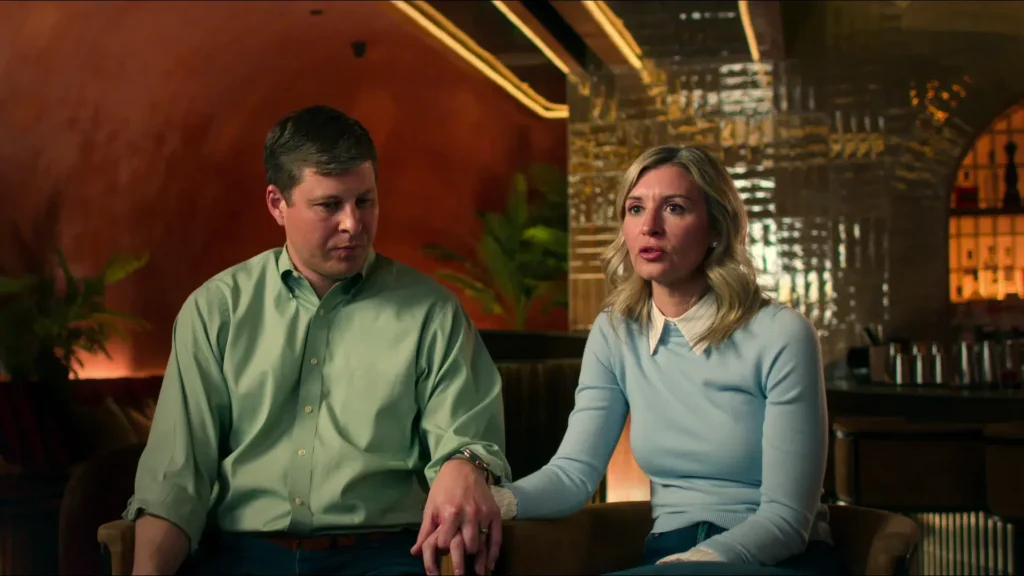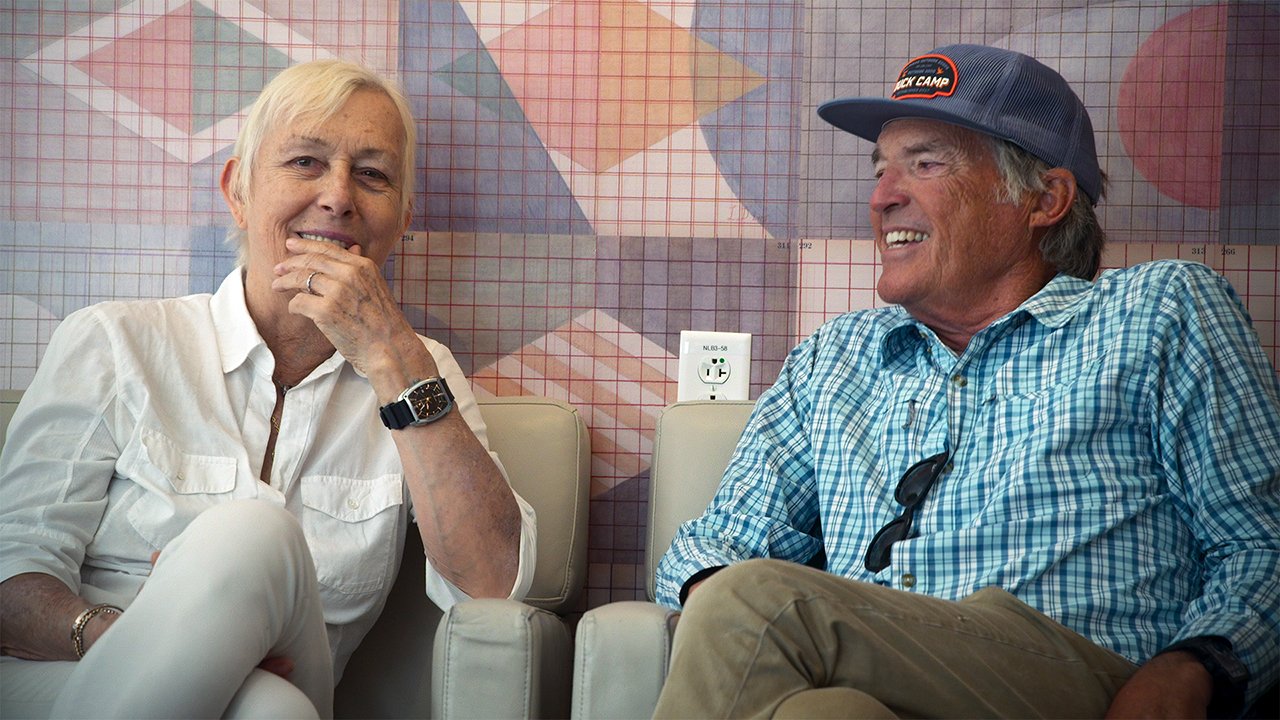

Chris and Martina: Final set. (Left to Right) Chris & Martina: Martina Navratilova and Andy Mills in The Final Set. Ten million. Courtesy of Netflix © 2026
In Chris and Martina: Final SetTennis legends Chris Evert and Martina Navratilova open up about their decade-long rivalry and reflect on their professional careers. Although the film captures them in raw, unfiltered interviews, director Rebecca Gitlitz sheds light on the players’ inner personal lives and details that even many dedicated tennis fans would never know. Here are 10 things we learned Chris and Martina: Final Set.
Chris and Martina: Final Set is now available to stream on Netflix, so we’d recommend watching a PowerShot of the doc before reading below.
1) Chris Evert was isolated by his old tennis teammates because of the intense media focus.
When Chris Evert made her debut at just 16 years old, she instantly became a media darling. A Newsweek cover story focused on her, the public’s perception of her as “cute” and “lovable”, and the fact that she was beating them on the court all created resentment among her older professional peers, who, in turn, were not as kind to her. However, over time, Evert’s successful racing inspired a new wave of women to take up the sport and the number of players increased. In the documentary, Billie Jean King recalls her fellow contestants telling her that they needed “Chrissy” in the superstar role. Their inclusion will bring forward the second generation of talent needed to bring greater visibility to women’s tennis.
2) Martina did not feel pressure to speak out.
Unlike Evert, Navratilova struggled to secure sponsorship throughout her career. But that same struggle also gave him the freedom to be vocal about his ideas without worrying about what anyone else thinks. For her part, Evert admitted in conversation with Navratilova that she actually admired her willingness to speak her mind, even if she found herself cast in the more guarded “girl next door” mold. While Navratilova was disappointed that her agent could not get her a comparable deal, she eventually realized that she did not have to bear the burden of keeping quiet. He let his racket do the talking.
3) Evert traces her competitive fire to a childhood spent on the court.
Much of Evert’s motivation and concentration to stay at the top of the game was born out of loneliness, not support as a child. Evert discusses how she played tennis mostly for her father, Jimmy Evert, motivated by a deep desire to impress him. He never got a chance to make friends in his childhood. In his words, “Friendship was never encouraged.” Her brother John says that she neither pulled all-nighters nor went on dates in high school, but was more reserved and focused. “Achieving success at a very young age was not for emotional or mental development,” Evert reflects.
4) Martina was also an athlete outside the court.
Navratilova had several girlfriends during her career. Everyone on the tennis tour circuit knew, and for years, they kept his sexuality a secret – at least until the media finally outed him. In the documentary, Pam Shriver explained that Martina had more than your average number of girlfriends. For her part, Navratilova explains that since she had no family in America, she was always emotionally dependent on whoever she saw at the time.
5) Martina and Chris didn’t speak for years during the height of their rivalry.
The documentary reveals that once Evert and Navratilova became indifferent to each other on and off the court, they stopped talking altogether for several years. Part of the rift is attributed to Navratilova’s then-girlfriend, basketball player Nancy Lieberman, who encouraged her to view Evert as the enemy if she truly wanted to be number one. Navratilova remembers Lieberman telling her, “You don’t need to be friends with him. You need to kick his ass.” The killer instinct that he once lacked finally surfaced. But its price was a deep coolness between the two – which even extended to the locker room, where they didn’t exchange a word for years.

Chris and Martina: Final set. (Left to Right) Chris & Martina: Chris Evert and Martina Navratilova in The Final Set. Ten million. Courtesy of Netflix © 2026
6) They still make fun of that SNL skit.
While discussing her cancer journey, Martina and Chris get into a playful feud over a sketch from 1989 when Evert hosted Saturday Night Live. In the excerpt, Navratilova (played by Nora Dunn) comically follows Evert through her career endeavors, desperately trying to outdo her at every turn. Decades later, the two legends repeated some of the excerpts in the documentary, this time mocking their shared experience with cancer, laughing at what their “shared career” looks like now compared to at the time. It’s a light-hearted moment that shows how far their rivalry has turned into a genuine friendship.
7) When out, female tennis players will use “bisexual” as the default – even if they identify as lesbian.
Navratilova discusses how a reporter for the New York Daily News lied about her permission to expose her sexuality and effectively outed her in the process. To make matters worse, the report identified her as bisexual, when in fact, she was a lesbian. Although Navratilova publicly supported it, this was only because “bisexual” was considered more acceptable than “lesbian” at the time. Tennis legend Billie Jean King says that in relation to her outing in 1981, the androgynous was always treated as a “backup” label. It was a safer, more palatable option for players who needed to protect themselves in an era that was much less forgiving towards gay athletes.
8) The trip to Czechoslovakia with Martina was “one of the most incredible trips” of Chris’ entire life.
In 1986, Navratilova and Evert traveled to Czechoslovakia together – a historic homecoming for Martina, who was returning for the first time since moving to the United States a decade earlier. Evert shared that, for his part, the trip was revolutionary for their friendship. She witnessed firsthand Navratilova’s loving impact on those around her and the deep, caring relationship she shared with her family. In that moment, Evert understood his opponent on an emotional level like never before, a turning point that transcended their relationship completely.
9) Martina found out about Chris’ cancer diagnosis without even knowing it herself.
The friends’ concurrent cancer diagnoses became a watershed moment for them. Evert told Navratilova she would have to have a mastectomy, and Navratilova cried for her friend, unaware at the time that she herself had cancer. Shortly afterward, she noticed a lump in her throat and was diagnosed with throat cancer.
10) Chris and Martina believe their friendship extends far beyond their singles wins.
When asked during the credits whether their friendship would have remained the same if they had not won 18 Grand Slams each, Evert and Navratilova both appeared surprised. Evert goes on to say that this is not the foundation of their friendship, while Navratilova admits that she is fine with them having similar wins.