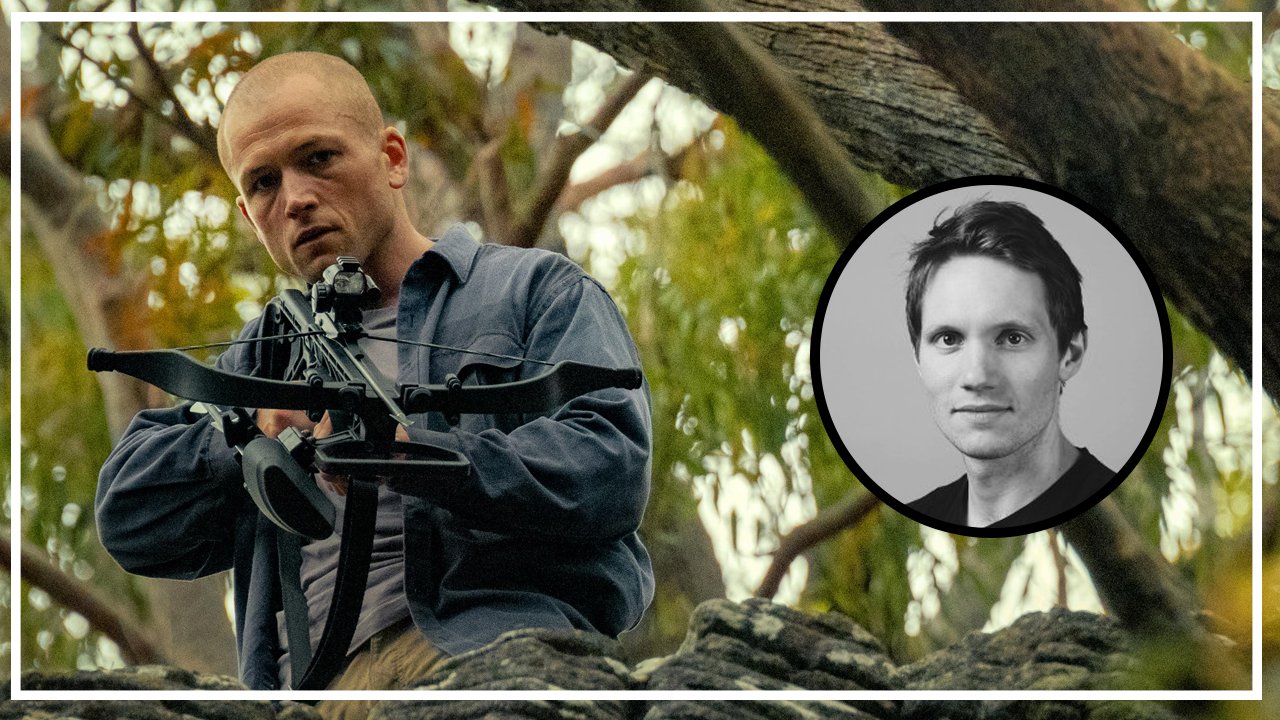
Image Credit: Framestore /
in ascending order top Nothing but impressive. Baltasar Kormakur’s 90s throwback thriller gets off to a bang, starting with a failed climb on the famous Troll Wall in Norway. The tangible results are in no small part due to Framestore’s VFX supervisor, Gavin McKenzie, who oversaw the crafting of the big opening and final climb. top.
McKenzie has over 16 years of experience in the visual effects business. He worked in two of Kormakur’s films – Animal And Everest. similar to EverestMcKenzie and Framestore team bring authenticity to climbing scenes top. Recently, he talked about creating big VFX scenes with What’s on Netflix top.
cinematographer Lawrence Sher was extremely impressed with the VFX work done here. In his view, digital effects came seamlessly together with the practical elements.
This was always our aim. We knew it was going to be a challenging film because the VFX I like to do is such that the audience doesn’t even realize it. It’s challenging when you’re filming with photoreal magic or creatures because it’s hard to hide behind. But I always try to base everything on reality, and it was really refreshing to do a film like this, which was based on a real-life scenario. We always wanted the audience to feel trapped in the environment.
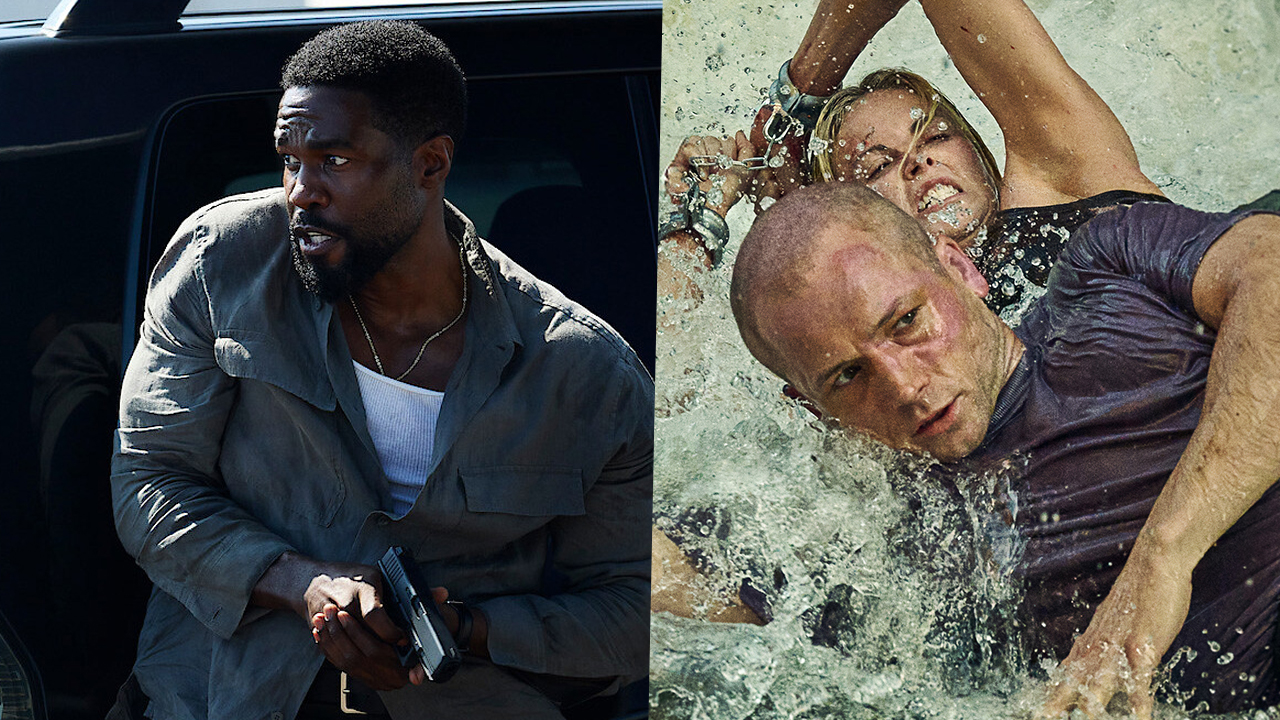
With the troll wall sequence at the beginning of the film, the actors were never there. Lawrence and [VFX supervisor] Enrique Pavadaz Shot some really amazing references for us. He took a lot of helicopter shots, aiming for wide establishing shots. I know they used some in the film, but it was very helpful for us to base our environment on.
troll wall – It’s kind of unique. How do you recreate it?
When we were first talking about the film with Enrique, was no one could climb it in the winter, because one, it’s a really dangerous thing to climb in the beginning. Two, no one wants to climb it in the winter. But the movie takes place in winter, so it’s really exaggerating the danger. Seeing it with beautiful snow everywhere and the landscape surrounding it really shows the danger of the film.
It was really interesting to visualize the mountain because in all the photography, and even the reference pictures of it, it is so big. It is very difficult to establish how big it is. We found some really good reference videos of people climbing and documenting their climbs. You really catch on, Oh my God, they’re this little thing on the mountain.
The establishing shot, which is a helicopter shot where we’re heading up the mountain, we had to put the people there in CG. Obviously, the climbers were not there. But we had to make them a little bigger because if they were their actual scale, you would never be able to see them because the mountain is so huge. So working with the mountain was a constant challenge in itself because we always wanted to show the slope, and we really wanted the audience to feel the vertigo.
There is so much depth to it that you had to create many different directions.
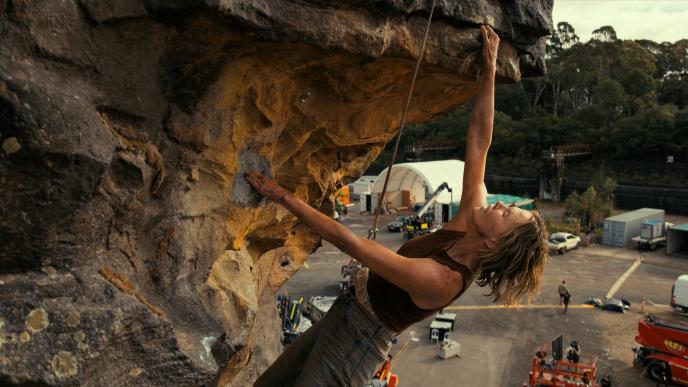
Definitely. It was interesting because they shot all the performances on a set piece that was about 20 to 30 meters long. So it was huge, but apparently the Troll Wall is over a thousand meters high. Getting the right perspective was important. They did a great job on the shoot making sure the scene down the wall was as intense as possible.
But as we were adding additional thousand meters, or even 600 meters, to its base, we often had to tilt the perspective of our CG camera slightly to give a more impossible slope. Because although the troll wall is very steep, it still has a gradual slope towards the floor. So when you look down on it, the floor is farther away from the viewer.
So we had to tilt the camera to make sure you really felt like the base of the wall was right underneath them. As soon as we started doing that, everyone working on it said, “Oh, I can’t look at it anymore because it’s too steep.” But this is what we wanted.
How did you want to create the feeling of dizziness?
free single It was a movie we watched a lot to get the feeling of being on the wall with him. The challenge of shooting this kind of film is that you don’t want the camera position to take away from the feeling that you are climbing with these people. They did a great job of placing the cameras close to the actors, giving you a feeling of claustrophobia, but also making you feel like you were climbing the wall with them rather than watching people climb the wall, if that makes sense.
How about handling digital lighting and snow in a sequence like Troll Wall?
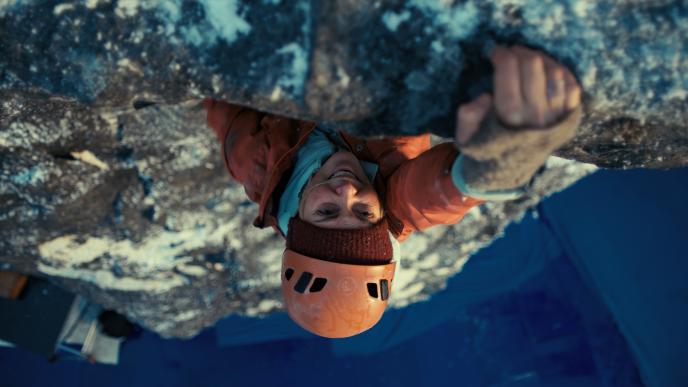
This was probably one of the most technically challenging sequences because we had all these blizzard effects simulating around the characters. Since the sequence takes place at night or at dawn, they had headlamps. So, all the CG around them needs to be lit with our CG lights. We had to body-track everyone and line up the headlamps, then illuminate everything with a light source that mimicked the light source used on set.
But we didn’t want the light to spread too far and there would be too much light around. We wanted the right cone of light to reveal the danger a little more. It was cool to see all the scratchy snow particles flying through the beam of light.
As you said before, you want the effects to be as invisible as possible, especially for a grounded thriller like this. When does your eye realize, okay, we’ve reached invisibility?
Well, that’s a challenging question because for some people and VFX supervisors, they will almost say, like any artist, “nothing is ever finished”. But for me, I like to base things on context and reality. Sometimes it helps to bring another supervisor or artist from another show to Framestore and have him look at the scenes we’re doing without the context of the movie and ask, “What do you think?” Fresh eyes are a good way to check what you’re seeing.
Especially with something that looks real, it’s difficult to hide visual effects that aren’t fitting or where the lighting is a little off. Or when you’re trying to push something very creatively and it starts moving away from reality, then you reach the uncanny valley and realize you’ve taken it too far.
So you’re always thinking, okay, I’ve got my extension and the plate they shot has the lighting in a position that doesn’t make the rest of the mountain look good, but I can’t put another sun in there because there aren’t two suns. Your mind immediately goes, he looks absolutely wrong. So you’re always trying to find an interesting way to complement the photography as well as make the environment singable.
I imagine VFX supervisors get scared even when they hear the words “uncanny valley.” Say for the final climb, how do you remain invisible without – again – falling into incredulity?
It’s about not pushing creativity too far from what needs to be based in truth. When we were doing some digi-doubles. We had a great stunt team on the shoot. They did amazing stunt performances and a lot of wire work, but there were some things they couldn’t do because they’re impossible, and that’s where we stepped in. Many of his stunt performances were great to use as reference or even as regular climbing footage.
We found ourselves scouring YouTube and the Internet searching for videos of climbers falling off mountains and studying footage where people were caught by their ropes. Thankfully, there isn’t much footage of anyone completely falling. It was really interesting what happens when the rope breaks or someone gets caught by their partner.
For the final climb, both Charlize and Terron did a lot of climbing, although Terron was supported by his rope. Charlize herself made a wonderful appearance, whether on set or on location. I think that really brought home the fact that she was really doing it. We wanted it to feel believable. It was mainly about enhancing the shots with the best looking environment, but never to the point where it distracted you from what she was doing.
Digital doubles have come a long way. I’m sure you remember the early 2000s, when a lot of them didn’t always look so good. What progress has been made in reaching this point of realism in digital doubles?
It comes down to having experience within a company that has created a lot of assets and creatures and understanding where detail is really needed most, as well as understanding the physics of how a character needs to move. You can create the most perfect portrayal of a character, but if it moves badly, the illusion falls apart. And vice versa. You can animate something perfectly, but if it doesn’t look right, it still won’t work.
It’s about finding the right balance of artists who really understand the process they must follow, but communication between all of them is also really important. You don’t want to go overboard modeling a crease under the eye if you’re never going to get close enough to see it. It’s about maximizing detail where it matters most.
So you can create an asset with a large level of detail and then take it further with really good textile simulation work. Again, you want this based on context and reality because we all intuitively know what a jacket looks like when blowing in the wind. Not that we’ve formally studied it, but by observing people throughout our lives, we understand what feels right. It’s really hard to imitate nature and people in CG because everyone is unconsciously a critic.
You intuitively know what feels right and what doesn’t. I always worry when you’re pushed to do something that doesn’t obey real forces like gravity, or when you move too far away from something that might actually happen, because it becomes harder to sell. So if you need to do this, I’d like to suggest ways to justify it physically. If we need someone to change direction as they fall, perhaps we can add a piece of rock that can redirect them instead of suddenly moving from one place to another for no reason.
Baltasar, especially after his experience directing EverestHow does his approach to CG look in the ascending order?
framestore did Everest With Balt, so we were lucky to have worked with him before, especially with ice. There were several times during the reviews where it became clear that Balt, being Icelandic, actually knows snow incredibly well. Obviously there are a lot of different names for ice because it behaves in so many different ways. So, making snow was a lovely challenge that Balt was happy with because if we were making him happy, we knew we had succeeded.