
Image Credit: Netflix
In case it’s not clear by now in 2026: Netflix wants to be your destination not only for prestige TV and blockbuster movies, but also for your daily podcast fix. Welcome to the “podcast age” of Netflix.
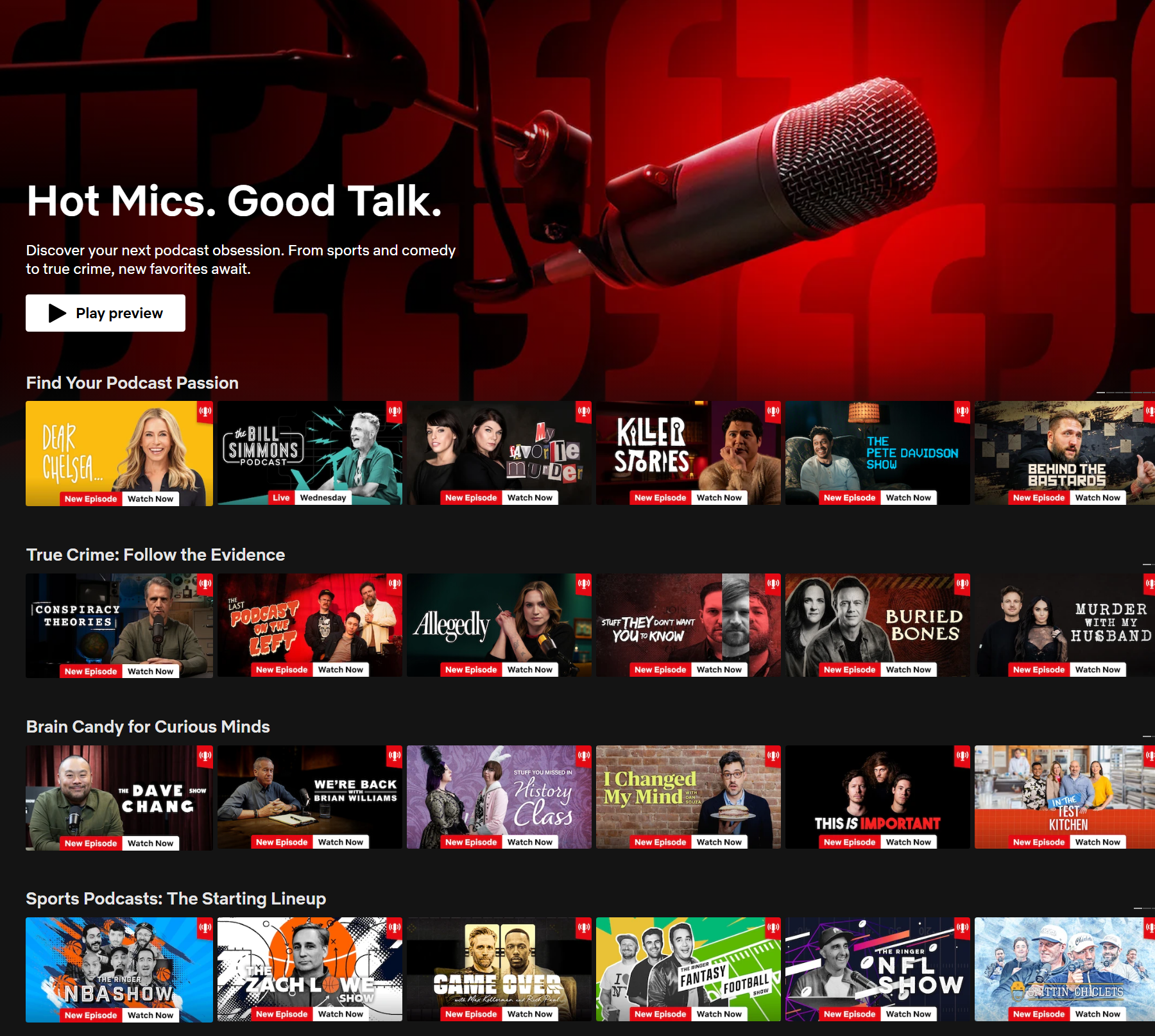
Since launching quietly in the United States at the end of the year and then gradually rolling out internationally in late February, Netflix has gone all-in on this format and continues to invest in it through the end of the year. According to our latest tracking, the streamer has grown to nearly 60 video podcasts on the platform in the US as of the time of publication, with many new episodes dropping on a regular cadence, whether it’s daily, a few every week, or one or two a month.
They’ve signed a massive $100 million joint deal with Spotify for Jay Shetty’s On Purpose, and loaded up the library titles from The Ringer, Barstool, and iHeartMedia. Those partnerships are in addition to their in-house titles and companion podcasts to their own films and series. This is in addition to the special story trades today for Good Mythical Morning joining the lineup Starting in September, Deadline reports that celebrity chef Nick DiGiovanni is bringing a new podcast along with his catalog. heart arrester is the next Netflix IP to get the podcast treatment.
Before Netflix releases its next engagement report, which should provide some real insight into what’s working and, possibly far more likely, what’s not, I have to ask: Is this really a good idea, or another classic Netflix ploy of trying to find a new path to engagement or subscribers, aggressively expanding and then cutting back if other data (of which there is a distinct lack so far) doesn’t stack up?
Let’s take a look at what’s working, what’s completely broken, and whether this podcast experiment will actually survive.
Strategy: Why Netflix needs to listen to you
To understand why Netflix is shutting down suddenly breakfast club (which switched from podcast format to daily live streams on Netflix) bridgertonYou have to check out the graveyard of Netflix talk shows.
For a decade, Netflix tried and failed to replicate the late-night format. Chelsea Handler, Joel McHale, Michelle Wolf, Hasan Minhaj—all canceled. In a recent interview with Professor G MarketsNetflix co-CEO Ted Sarandos finally admitted what we all knew: the classic format is dead. “We tried talk shows over and over again, and I think the format has kind of given way to podcasting,” Sarandos said, pointing out that audiences today either want a giant CGI spectacle or a deeply intimate, unpolished conversation. “They really want to hear this long, independent interview without makeup and security.”
Scott Galloway said it another way (perhaps somewhat ridiculously): “Podcasts are essentially 80% of a television show for 10% of the price.” For a company that is desperately trying to increase the level of highly engaging, ad-supported content and motivate its users to use more minutes and hours, on paper, video podcasts provide hundreds of hours of affordable, low-risk advertising inventory.
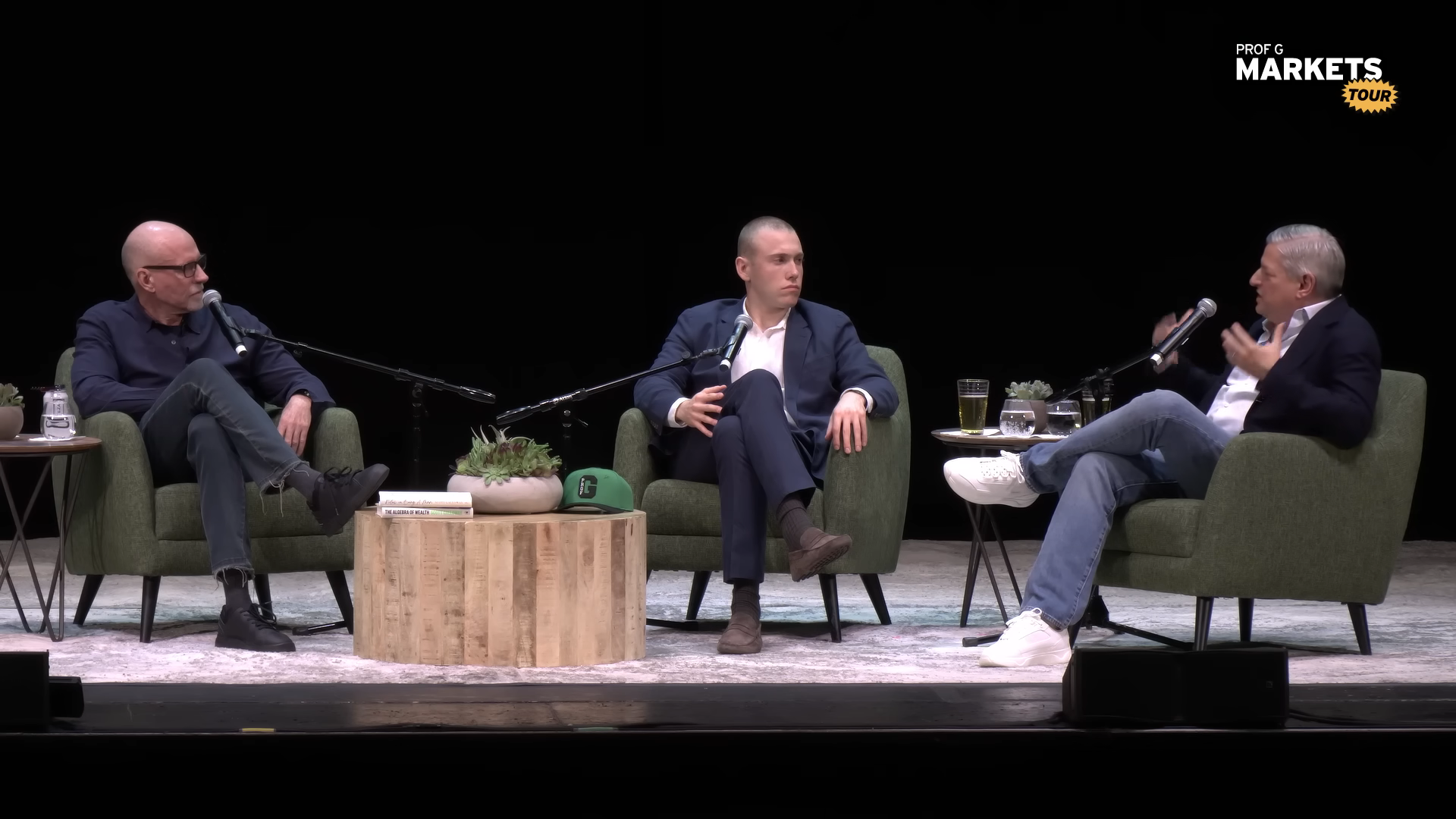
Ted Sarandos on the Professor G Markets Podcast
The best information so far about consumption comes from TED on two occasions where he said that the format unlocks “dead” hours. Netflix engagement traditionally peaks at 8 p.m. They want you to open the app at 8 a.m. on the train, or 1 p.m. at the gym. “What we’re seeing in the early days is very promising that people are watching, and they’re watching during the day where typically there isn’t much streaming,” Sarandos revealed.
Is something working? Live Sports and Mega-Celebrities
Engagement reports should give a real glimpse into which of these podcasts are working and whether they are actually generating a lot of watch hours because as of now, it’s hard to say if anything is working with one major exception.
That’s because apart from one title, none of these new podcasts have made the daily top 10 in any country. We tried using Google Trends and Wikipedia to see if there was any notable increase in activity, but the data was inconclusive or even showed a decline in interest.
Then came the 2026 FIFA World Cup.
In June, The Rest Is Football (hosted by Gary Lineker, Alan Shearer and Micah Richards) finally broke into the Netflix top 10 charts and has done so consistently throughout the World Cup. Peaking at #2 overall in the UK and topping the charts in Ireland and Iceland, it proved that event-driven content can really work in this format. The show was closing at 6am BST to capture the morning commute, which completely validates Sarandos’ theory of daytime viewing.
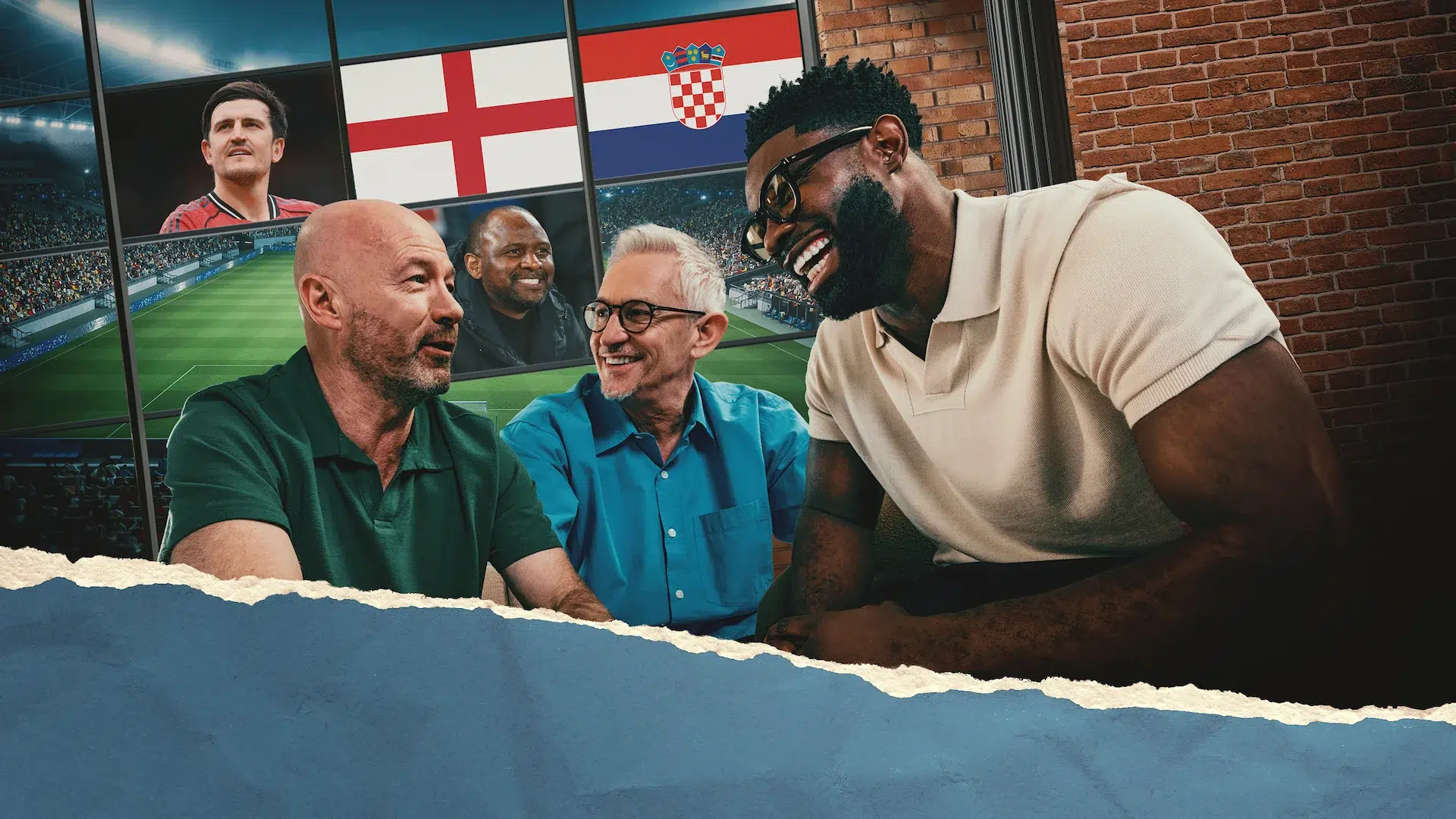
Image Credit: Netflix
What’s exactly broken: A UI nightmare
But this is where I have to be extremely critical. If Netflix wants to become a daily podcast player, they’ll have to admit that their app is vastly inferior to YouTube and Spotify, where the majority of podcast listening/watching occurs. Right now, incorporating an entirely different medium into an interface designed for television and movies is making the user experience particularly bad.
They have introduced new lines which help, highlight the content of the episode but the overall experience is not good.
Here is a good example. I just saw a clip of The Ringer’s The Star Wars movie draft on TikTok on social media. I want to see that episode. On Spotify and YouTube I can search for the title of that episode because I know roughly what it’s going to be about. On Netflix, it didn’t even return The Big Picture in the search results, so I had to manually type it in again. Then, because there are over 50 episodes, I have to track down roughly when that episode dropped and scroll down, parsing the episodes to eventually find it (the April episodes are still reporting that they are “new”).
Here are the burning issues Netflix needs to address tomorrow:
- “Continue” on pollution: This is my biggest pet peeve at the moment. If I click on a two-hour episode of The Bill Simmons Podcast to listen to a five-minute segment about a recent movie, that giant thumbnail is now permanently lodged in front of my “Continue Watching” row, taking my actual TV binges off the screen. Netflix desperately needs a dedicated “Continue Listening” line. Keep them separate.
- Screen-Lock Problem: Netflix wants us to listen on the go, but if you lock your phone screen, the app closes. Users have been asking for a basic “lock screen/background audio” toggle. I don’t want to drain the battery of a phone rendering 4K video in my pocket just to listen and then have the app crash completely if I wear too many pants. I suspect there’s probably something devilish in the details of the contracts for some of these, why they can’t be audio only, but podcasts should have the option.
- Search Weakness: Main search bar is broken. If you search for an actor now, you have to go through dozens of different podcast episodes where that actor is merely mentioned in the description before you find their actual movies. Netflix requires a dedicated search bar inside each podcast’s landing page or a separate row within the search page that specifically lists podcast episodes that match.
- Better downloads and notifications: Not just mobile downloading wise, audio-only would be nice as the app is currently eating up gigabytes of local storage by downloading massive video files for daily shows. It would also be nice to actually be able to subscribe to one of these shows and get notified of new episodes with Netflix’s notification bell (which could happen with a rework but that’s for another day) or some kind of push notification/email setup.
Finally, unlike Netflix’s main catalog, which is widely available in multiple languages, whether subtitled or dubbing, podcasts are exclusively, for the most part, in English. One potential obstacle to overcoming these limitations is that Netflix’s core catalog, like Netflix, has been one of its greatest strengths over the past decade.
An inevitable reckoning is coming? throw stuff on the wall
If you’ve been reading What’s on Netflix for a while, you know exactly what stage we’re in. Netflix is in its “golden age” of a new initiative – the phase where they throw massive amounts of money and content at the wall to see what sticks.
We saw this with interactive specials (Bandersnatch, Trivia Quest), which were quietly wiped from the platform earlier this year. We saw this with Netflix animation in early 2020, with the cruelty department being gutted ahead of the 2022 subscriber revamp and many shows and movies being canceled entirely. We saw this with Netflix Games, where they created a AAA PC studio (“Team Blue”), but it was unceremoniously shut down a few years later and even moved away from mobile games to more casual experiences on their own platforms or mobile. We’ve also seen this to some extent with Netflix’s TUDUM blog, where it’s now become an SEO blog with bizarre features (without a functional search box, by the way) where they just post press releases.
To that extent, I suspect Netflix is giving this podcast division a quiet ticking clock. Licensing these shows isn’t cheap. If these video podcasts don’t start driving measurable ad revenue or subscriber retention within the next 18 to 24 months, you can bet your subscription fees that these deals will quietly expire, and the “Podcast Hub” will be significantly reduced in size.
To this extent, podcasts have already gone through similar golden ages and recessions. During the pandemic “golden age” of podcasting (roughly 2019 to 2022), audio was considered the gold rush. Spotify alone spent more than a billion dollars acquiring studios like Gimlet Media and The Ringer and handing out massive exclusive contracts to names like Meghan Markle and Obama. But the bubble will officially burst by 2023 and 2024. According to industry analysis and reports from outlets like talking point memoThe industry witnessed a severe and rapid contraction. Advertising revenues declined and Hollywood cooled on purchasing podcast IP. To that end, Netflix is here to provide a second wind to companies and podcasters but will it really last this time?
That huge data dump would be a good litmus test. We’ll finally know whether millions of people are really watching The Breakfast Club on their TVs, or whether Netflix’s podcast era is just another expensive, fleeting experiment. To me, it feels like 2-3 years ago this podcast push would have been a welcome addition, but when Netflix’s involvement is under intense scrutiny, especially after the Warner Bros. deal fell through and Netflix is looking for growth narratives, is it worthwhile to put so much emphasis on such low-hanging fruit? Not sure.